"God is Spirit, and those who worship Him must worship in spirit and truth." (John 4:24)
Sermons by David Scarpino (Page 11)
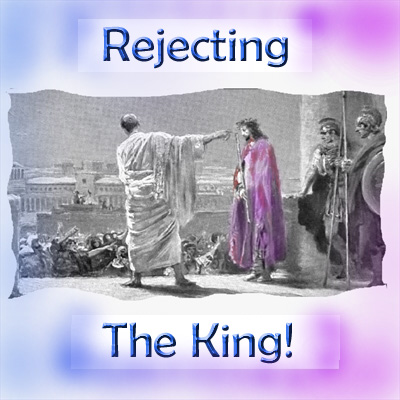
Rejecting the King!
We read in the scripture that Jesus was taken by lawless hands, tried by the Jewish Sanhedrin who find nothing to accuse Him of, so they turned Him over to the Roman Law, to Pilate. Pilate found no fault either which should have ended everything. But, when given a choice between freeing Jesus and a notorious prisoner called Barabbas the Jews chose Barabbas, and shouted crucify Him! When Pilate aske, “shall I crucify your King?”, the chief priests answered, “We have not king but Caesar!”
I want to see by the scriptures what it was that the Jews rejected when they followed after their leaders’ directions, as a warning to us not to do the same…
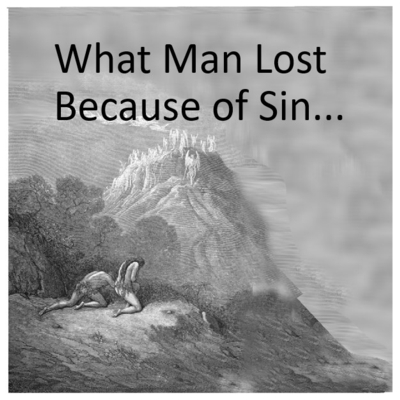
LOST AND FOUND
We know that the devil was a murderer from the beginning. . .
We know that the devil does not stand for truth. . .
We know when he speaks a lie, that it’s from his own self, because he is the father of it (John 8:44).
In the garden that serpent created a “desire to sin” in Eve’s heart simply by highlighting the “benefits” of eating the forbidden fruit.
Benefits, yes, but at a great cost!
in this lesson I’d like us to consider 3 things that were lost when sin entered the world…

THE MAN OF INTEGRITY
“I have made a covenant with my eyes; Why then should I look upon a young woman?” (Job 31:1)
Integrity is a firm, unwavering commitment to ethical behavior. Real integrity is not like the waves of the sea – rather means you have a clear sense of morality, as received from God, and you stick to it at all costs. Real integrity does not depend on the status quo, or the wishe of society, does not depend on other people reactions to you, and does not depend on your personal feelings.
How is it that Job knew not to look upon a young woman? How is it that Job understood the differeance between right and wrong?
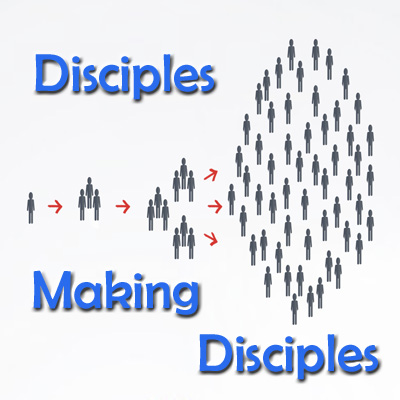
DISCIPLES MAKING DISCIPLES
Jesus taught, “13 “You are the salt of the earth; but if the salt loses its flavor, how shall it be seasoned? It is then good for nothing but to be thrown out and trampled underfoot by men. 14 “You are the light of the world. A city that is set on a hill cannot be hidden. 15 Nor do they light a lamp and put it under a basket, but on a lampstand, and it gives light to all who are in the house. 16 Let your light so shine before men, that they may see your good works and glorify your Father in heaven” (Matthew 5:13-16).
From here let us learn what a disciple is, and what makes a disciple…
A BODY PREPARED
“5 Therefore, when He came into the world, He said: “Sacrifice and offering You did not desire, but a body You have prepared for Me. 6 In burnt offerings and sacrifices for sin You had no pleasure. 7 Then I said, ‘Behold, I have come—In the volume of the book it is written of Me—To do Your will, O God.’ ” 8 Previously saying, “Sacrifice and offering, burnt offerings, and offerings for sin You did not desire, nor had pleasure in them” (which are offered according to the law), “Therefore, when He came into the world, He said: “Sacrifice and offering You did not desire, but a body You have prepared for Me” (Heb. 10:5-8).
We hear of a body that was prepared for the Messiah, for Jesus, and with purpose. But we must understand that there were actually three bodies throughout the history of man. In this lesson we will consider these three bodies, their purpose and timing.
1. Is the body of Man himself…
2. The Lord’s physical body…
3. And three the “body of Christ”, the church…
We begin in the beginning with the first body that was prepared…
PUTTING ON CHRIST – SELF-CONTROL PART 2
In the previous lesson in the series Putting On Christ, we did some study on the value and necessity of the last characteristic of the fruit of the spirit: self-control.
We defined self-control as: “have mastered your inner self” by submitting our spirit to God’s via His word.
Self-control is discipline, under the direction of God’s Word that enables to walk in the light and be pleasing to God.
We can control lust by the spirit of God that is in us. We can control thoughts that become addictions and “not be brought under the power of any” (1 Cor. 6:12).
We can say no, by the power of the spirit that is in us and never become slaves to anything but righteousness.
To wrap this point up I’d like to consider three topics, beginning with…
Take Every Thought Captive “casting down arguments and every high thing that exalts itself against the knowledge of God, bringing every thought into captivity to the obedience of Christ,” (2 Cor. 10:5)…
PUTTING ON CHRIST – SELF-CONTROL
Solomon wrote, “Whoever has no rule over his own spirit is like a city broken down, without walls” (Proverbs 25:28).
Defining self-control:
The word [ἐγκράτεια] egkráteia, comes from “en, in the sphere of”, and “krátos, dominion, mastery”. That is you have mastered your inner self i.e., “self-control”
Oxford Dictionary defines it this way. “the ability to control oneself, in particular one’s emotions and desires or the expression of them in one’s behavior, especially in difficult situations.”
Webster says, “restraint exercised over one’s own impulses, emotions, or desires”.
For the believer “self-control” or “spirit-control” can only be accomplished by the power of God. Peter commands us all to add self-control to our faith (2 Pet. 1:6). It is the Christian’s spiritual wall of defense against the sinful desires that wage war against the soul. Think of yourself standing with a wall around you, outside there are all kinds of activities, some sinful, and some acceptable. It encompasses every life decision. Should I study my bible or, watch my favorite television show? Apply the fruit of the Spirit to the question and the answer will aways be study.
That is not to imply that entertainment doesn’t have a place in our life, but if there is a choice to be made between the two, the right choice must always be according to the Spirit.
“24 Do you not know that those who run in a race all run, but one receives the prize? Run in such a way that you may obtain it. 25 And everyone who competes for the prize is temperate in all things. Now they do it to obtain a perishable crown, but we for an imperishable crown. 26 Therefore I run thus: not with uncertainty. Thus I fight: not as one who beats the air. 27 But I discipline my body and bring it into subjection, lest, when I have preached to others, I myself should become disqualified.” (1 Cor. 9:24-27)
Self-control is running the race so as to receive an imperishable crown which requires discipline. Self-control is not an option for the child of God-IT IS A MUST…

MAKE NO PROVISION FOR THE FLESH
One scripture that we read this morning was from Romans 13:14. I would like to spend our time tonight by expounding a little on both verse 13, and verse 14.
“Let us walk properly, as in the day, not in revelry and drunkenness, not in lewdness and lust, not in strife and envy. But put on the Lord Jesus Christ, and make no provision for the flesh, to fulfill its lusts.” (Romans 13:13-14)
Let’s begin by defining these six words Paul used to warn us how not to walk:
1. Revelry: Usage: “kómos”
2. Drunkenness: Usage: The term “methé”
3. Lewdness: Usage: The Greek word “κοίτη”
4. Lust: Usage: The term “aselgeia”
5. Strife: Usage: The Greek word “eris”
6. Envy: Usage: In the New Testament, “zelos”
Now let’s apply this and learn to Walk Properly…

We have been learning from the scriptures how we who are saved can continue the process of “Putting on Christ”, which is initially done when we accepted the invitation of Christ in baptism. (Gal. 3:27)
• Paul further enlightens us as to the meaning of putting on Christ in his writing to the church at Rome.
• In chapter 13 and verse 14 Paul wrote, “But put on the Lord Jesus Christ, and make no provision for the flesh, to fulfill its lusts.” (Rom. 13:14)
• Thus, putting on Christ demands that we change, through repentance.
• It is not a one-time thing, rather a lifelong process of sanctification (1 Pet. 3:15), putting on righteous-ness and putting off sin, preparing ourselves for eternity.
• The putting on of righteousness is accomplished by putting on the fruit of the Spirit.
• Thus far, we have studied how we put on love, joy, peace, longsuffering, kindness, goodness, faith-fulness…
As we continue with our theme of Putting on Christ, we turn to the 8th fruit of the Spirit which is gen-tleness.
In the scriptures we read of victory after victory that God has won against the enemies of His people.
• And there are many very sad events throughout the history of man times when people suffered,
mostly because they turned away from following God.
• Yet, tonight in this lesson I wanted to address the good news through some of the
words of glad tidings that bring the church a sense of joy.
Words that I hope will be encouraging to us…